
When you’re running a pub, hotel or restaurant, furniture is one of the bigger decisions you’ll make during a fit-out or refurbishment.
For some operators, it’s purely about finding something that looks good, does the job and fits the budget. For others, it’s about getting every detail right, from the weight of a chair to the feel of an upholstered seat.
Both approaches are valid, and the good news is quality and cost can absolutely align – especially when you think about furniture over the full lifetime of the asset rather than the upfront price tag.
Contract furniture isn’t really a cost in the traditional sense. It’s an asset that influences how long guests stay, how much they spend, how the space photographs, and how often you have to call a supplier to replace something that’s worn out before its time.
Here’s a closer look at the hidden return on that investment, and why specifying the right furniture from the start is one of the most underrated commercial decisions a hospitality operator can make.
Furniture isn’t a cost, it’s a necessary investment
A domestic dining chair might last a family ten years of light use. Drop that same chair into a busy pub on a Saturday night and you’ll be lucky to get eighteen months out of it.
Contract furniture is built differently. It uses stronger frames, denser foams, commercial-grade fabrics, scratch-resistant finishes and tested joints designed for the kind of repeated, heavy use that hospitality venues put their furniture through every single day.
Industry consensus is that commercial-grade hospitality furniture might be more expensive at first, but it’s a better long-term investment with fewer replacements and repairs needed.
The maths gets interesting when you stretch it over 5-10 years:
- Let’s use our commercial dining chairs as an example. The average chair cost is around £120, and they’ll last in busy restaurants for around 8-10 years.
- A £50 domestic chair alternative would need replacing every 1-2 years since it isn’t built for heavy use. This could cost upwards of £300 over a decade, and that’s before you factor in delivery, installation and the downtime of swapping it out.
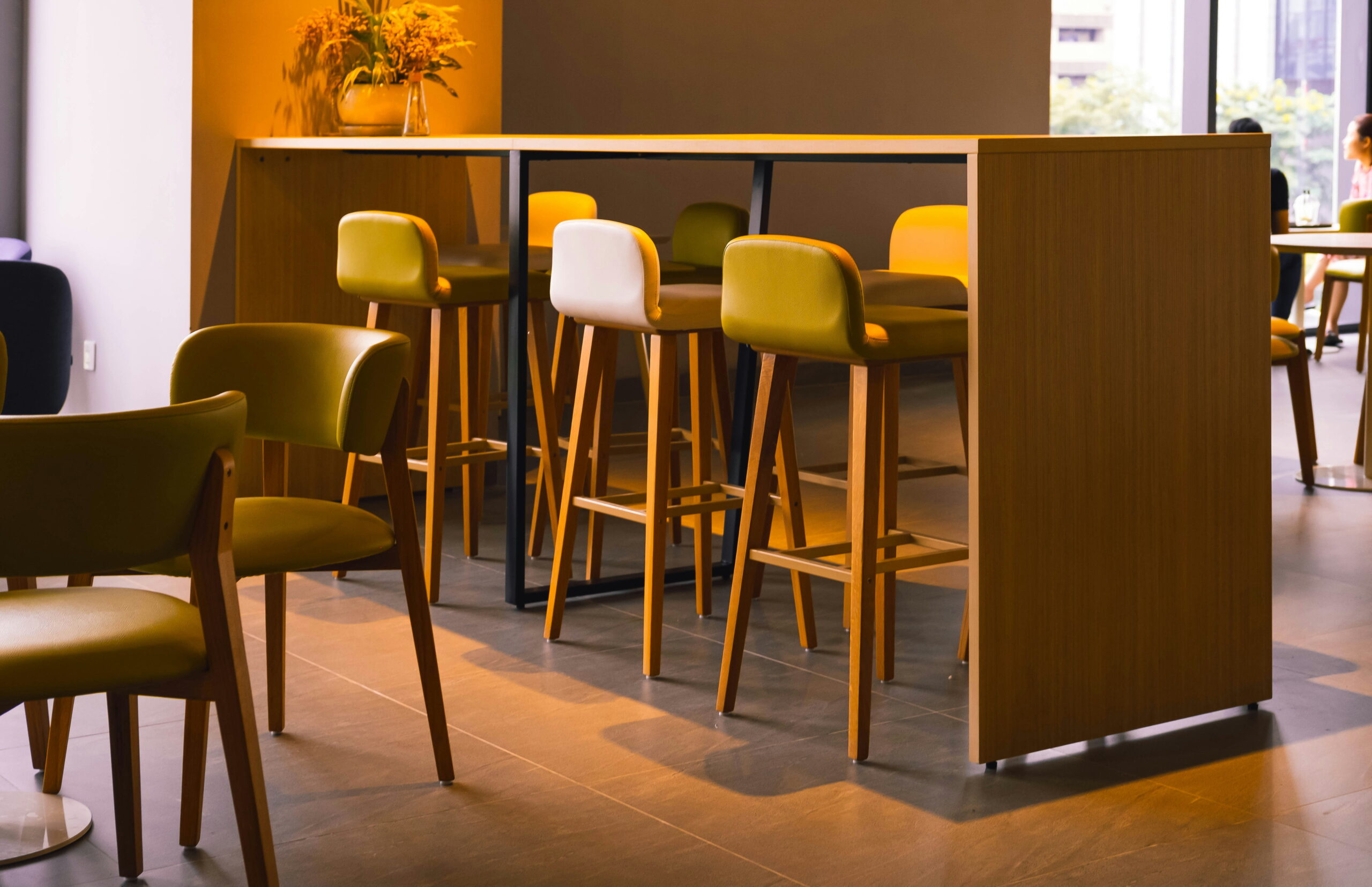
Better furniture can increase sales
The ROI argument doesn’t end at durability. The biggest returns come from how furniture influences your customers’ spending behaviour.
There’s a growing body of research showing that seating comfort directly affects how long customers stay and how much they order. It turns out that comfort plays a measurable role in dwell time.
Ergonomic seating encourages customers and guests to stay longer, while overly rigid or cramped furniture signals quick turnover. Comfortable diners aren’t just happier. They’re more likely to order that extra cocktail, share a dessert, or recommend the establishment to friends
That extra round, that shared pudding, that bottle of wine instead of two glasses: it all adds up across hundreds of covers a week.
Matching seating to commercial intent
Comfortable seating increases dwell time, which typically leads to higher order values and additional purchases. The goal isn’t to make every seat as plush as possible, it’s to specify furniture that fits the commercial purpose of the space it sits in.
- Restaurants, casual dining and gastropubs benefit from upholstered chairs that encourage diners to stay for a second course or another drink. We typically see this with some pubs, too.
- Quick-service venues like bars and cafes often do better with slightly firmer seating that supports a healthier turnover during peak periods.
- Lounge and hotel public areas call for soft seating that signals “stay a while”, because every extra fifteen minutes spent in the bar is an extra opportunity to spend.
Brand perception is built in the first thirty seconds
Customers form an impression of a venue almost the moment they walk in, and furniture is one of the biggest visual cues they read. Worn upholstery, mismatched chairs, scuffed table edges and wobbly bar stools all send a clear signal, whether the food is brilliant or not.
Well-chosen furniture does the opposite. It quietly tells the customer that the venue is cared for, that the operator pays attention to detail, and that their time and money are worth investing here.
For pubs, this might mean traditional wood and upholstered banquettes that lean into a classic, lived-in feel. For modern restaurants, it might mean clean lines, statement chairs and considered material choices. For hotels, the focus might be on furniture that holds up to photography, social media and the scrutiny of guests who’ve stayed somewhere else recently.
Choose pieces that fit your brand and will still feel right in 5 years, rather than reupholstering every eighteen months because the fabric has tired or the style has dated.
Less downtime, fewer headaches
There’s a third return on better furniture that doesn’t show up on the customer side at all. It shows up in the back-of-house.
Every time a chair breaks during service, you’ve got a problem to solve. Either you’re hiding it in a corner, pulling something from another section, or apologising to a group of six who can’t sit together. Multiply that across a year and the operational cost is real. Staff spend time managing the issue, the customer experience takes a hit, and someone has to find time to source, order, accept delivery and install the replacements.
Commercial furniture investments solve this almost entirely. The frame stays sound, the upholstery holds up to cleaning, and outdoor furniture survives more than one British winter.
How long should commercial furniture actually last?
A common question we get at Warner is how long commercial furniture should realistically last. The honest answer is: it depends on the piece, the environment and the level of use – but here’s a rough guide:
- Indoor chairs, armchairs and sofas: 7-10 years
- Tables and table bases: 8-12 years
- Outdoor furniture: 5-8 years
- Bar stools and high stools: 5-8 years
Where to invest first
If you can’t refurbish everything at once, the smartest place to start is with the pieces that work hardest and are seen most.
Most of our customers get the best return by investing in:
- Dining chairs and main seating – the items customers physically interact with the most
- Outdoor furniture – especially relevant for pubs with beer gardens, where hot weather can increase sales by 49%
- Statement pieces in arrival areas – the bar, the entrance, the reception, where first impressions are formed
If you’re planning a phased refresh, browse our commercial chairs and contract tables or get in touch with us should you have any questions. For venues looking to stand out or work around an unusual layout, our made-to-order range lets you create something that fits your space and brand precisely.
The bottom line
Cheap furniture is rarely cheap. It costs you in replacements, in downtime, in the impression it makes on customers, and in the spend per head you never quite manage to lift. Contract furniture costs more on day one and considerably less across the lifecycle of the asset.
For pubs, hotels and restaurants thinking about a refurbishment, an extension or a brand refresh, treating furniture as an investment rather than an expense is one of the simplest mindset shifts that pays back the fastest.
At Warner Contract Furniture, we work with hospitality operators across the UK to specify furniture that fits the venue, the brand and the budget without compromising on the things that actually drive return. If you’d like to talk through your project, request a quote and our friendly team will be in touch.